Diamond Watches Details
Jewel bearings were invented in 1704 for use in watches by Nicolas Fatio de Duillier, Peter Debaufre, and Jacob Debaufre, who received an English patent for the idea. Originally natural jewels were used, such as diamond, sapphire, ruby, and garnet. In 1902, a process to make synthetic sapphire and ruby (crystalline aluminium oxide, also known as corundum) was invented by Auguste Verneuil, making jewelled bearings much cheaper. Today most jewelled bearings are synthetic ruby or sapphire Historically, jewel pivots were made by grinding using diamond abrasive. Modern jewel pivots are often made using high-powered lasers, chemical etching, and ultrasonic milling.Characteristics
The advantages of jewel bearings include high accuracy, very small size and weight, low and predictable friction, good temperature stability, and the ability to operate without lubrication and in corrosive environments. They are known for their low static friction and highly consistent dynamic friction.[1] The static coefficient of friction of brass-on-steel is 0.35, while that of sapphire-on-steel is 0.10–0.15.[1][2] Sapphire surfaces are very hard and durable, with Mohs hardness of 9 and Knoop hardness of 2000, and can maintain smoothness over decades of use, thus reducing friction variability.[1] Disadvantages include brittleness and fragility, limited availability/applicability in medium and large bearing sizes and capacities, and friction variations if the load is not axial
Jewel bearings were invented in 1704 for use in watches by Nicolas Fatio de Duillier, Peter Debaufre, and Jacob Debaufre, who received an English patent for the idea. Originally natural jewels were used, such as diamond, sapphire, ruby, and garnet. In 1902, a process to make synthetic sapphire and ruby (crystalline aluminium oxide, also known as corundum) was invented by Auguste Verneuil, making jewelled bearings much cheaper. Today most jewelled bearings are synthetic ruby or sapphire Historically, jewel pivots were made by grinding using diamond abrasive. Modern jewel pivots are often made using high-powered lasers, chemical etching, and ultrasonic milling.Characteristics
The advantages of jewel bearings include high accuracy, very small size and weight, low and predictable friction, good temperature stability, and the ability to operate without lubrication and in corrosive environments. They are known for their low static friction and highly consistent dynamic friction.[1] The static coefficient of friction of brass-on-steel is 0.35, while that of sapphire-on-steel is 0.10–0.15.[1][2] Sapphire surfaces are very hard and durable, with Mohs hardness of 9 and Knoop hardness of 2000, and can maintain smoothness over decades of use, thus reducing friction variability.[1] Disadvantages include brittleness and fragility, limited availability/applicability in medium and large bearing sizes and capacities, and friction variations if the load is not axial
Diamond Watches
 Diamond Watches
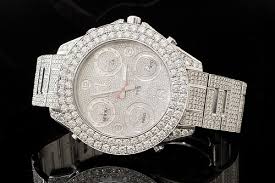
Diamond Watches
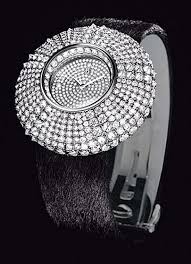 Diamond Watches
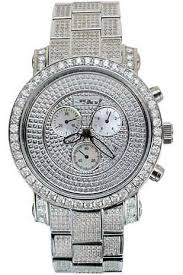 Diamond Watches
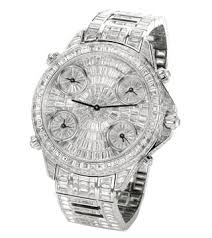 Diamond Watches
 Diamond Watches
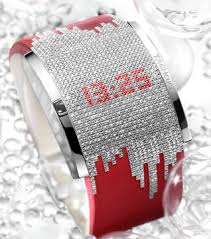 Diamond Watches
 Diamond Watches
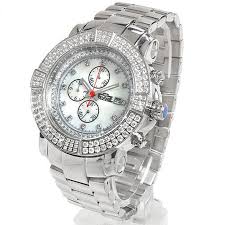 Diamond Watches
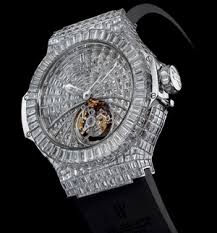 Diamond Watches
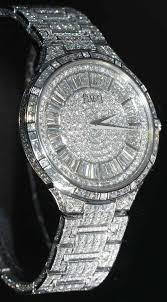 Diamond Watches
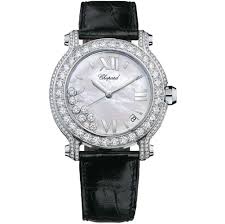 Diamond Watches
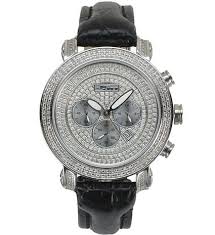 Diamond Watches
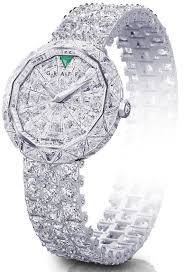 Diamond Watches
 Diamond Watches
 Diamond Watches
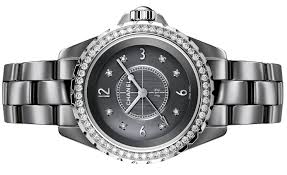 Diamond Watches
 Diamond Watches
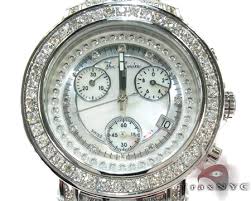 Diamond Watches
 Diamond Watches

No comments:
Post a Comment