Canary Diamond Details
In its rough state, a diamond is fairly unremarkable in appearance. Most gem diamonds are recovered from secondary or alluvial deposits, and such diamonds have dull, battered external surfaces often covered by a gummy, opaque skin—a comparison to "lumps of washing soda" is apt. The act of polishing a diamond and creating flat facets in symmetrical arrangement brings out the diamond's hidden beauty in dramatic fashion.
When designing a diamond cut, two primary factors are considered. Foremost is the refractive index (RI) of a diamond, which, at 2.417 (as measured by sodium light, 589.3 nm), is fairly high compared with that of most other gems. Diamond's RI is responsible for its brilliance—the amount of incident light reflected back to the viewer. Also important is a diamond's dispersive power—the ability of the material to split white light into its component spectral colors—which is also relatively high, at 0.044 (as measured from the B-G interval). The flashes of spectral colors—known as fire—are a function of this dispersion, but are, like brilliance, only apparent after cutting.
Brilliance can be divided into the definitions external brilliance and internal brilliance. The former is the light reflected from the surface of the stone—its luster. Diamond's adamantine ("diamond-like") luster is second only to metallic (i.e., that of metals); while it is directly related to RI, the quality of a finished stone's polish will determine how well a diamond's luster is borne out.
In its rough state, a diamond is fairly unremarkable in appearance. Most gem diamonds are recovered from secondary or alluvial deposits, and such diamonds have dull, battered external surfaces often covered by a gummy, opaque skin—a comparison to "lumps of washing soda" is apt. The act of polishing a diamond and creating flat facets in symmetrical arrangement brings out the diamond's hidden beauty in dramatic fashion.
When designing a diamond cut, two primary factors are considered. Foremost is the refractive index (RI) of a diamond, which, at 2.417 (as measured by sodium light, 589.3 nm), is fairly high compared with that of most other gems. Diamond's RI is responsible for its brilliance—the amount of incident light reflected back to the viewer. Also important is a diamond's dispersive power—the ability of the material to split white light into its component spectral colors—which is also relatively high, at 0.044 (as measured from the B-G interval). The flashes of spectral colors—known as fire—are a function of this dispersion, but are, like brilliance, only apparent after cutting.
Brilliance can be divided into the definitions external brilliance and internal brilliance. The former is the light reflected from the surface of the stone—its luster. Diamond's adamantine ("diamond-like") luster is second only to metallic (i.e., that of metals); while it is directly related to RI, the quality of a finished stone's polish will determine how well a diamond's luster is borne out.
Canary Diamond
 Canary Diamond
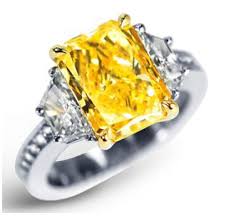 Canary Diamond
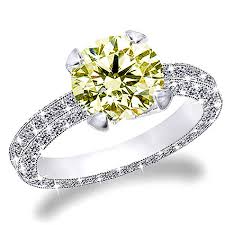 Canary Diamond
 Canary Diamond
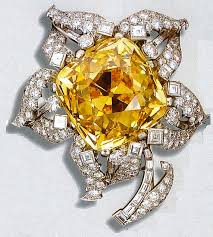 Canary Diamond
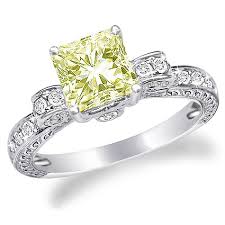 Canary Diamond
 Canary Diamond
 Canary Diamond
 Canary Diamond
 Canary Diamond
 Canary Diamond
 Canary Diamond
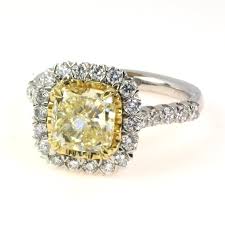 Canary Diamond
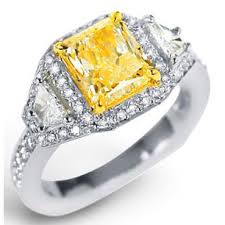 Canary Diamond
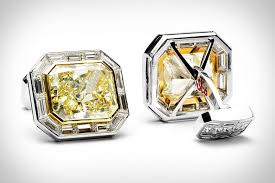 Canary Diamond
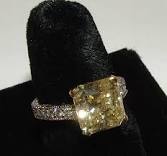 Canary Diamond
 Canary Diamond
 Canary Diamond
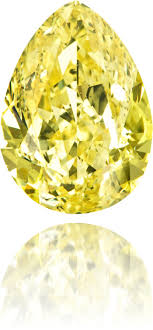 Canary Diamond
 Canary Diamond

No comments:
Post a Comment