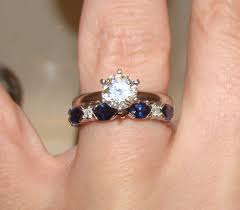
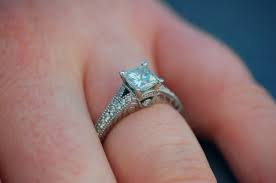
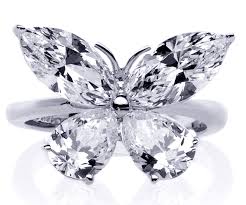
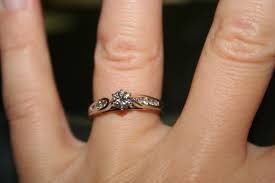
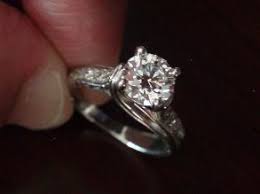
1 Carat Diamond Details
First attested in English in the mid-15th century, the word carat came from Middle French carat, in turn from Italian carato, which came from Arabic qīrāṭ (قيراط), which came from Greek kerátion (κεράτιον) meaning carob seed (literally "small horn")[4][5][6] (diminutive of - keras, "horn"[7]) and was a unit of weight[8] though it was not likely used to measure gold in classical times.[4] The Latin word for carat is siliqua. This common belief that carat derives from carob seeds stems from the assumption that the seeds had unusually low variability in mass.However, one group of researchers have found that carob seeds in fact have typical variability compared to the seeds of other species.
This was not the only reason. It is said that, in order to keep regional buyers and sellers of gold honest, potential customers could retrieve their own carob seeds on their way to the market, to check the tolerances of the seeds used by the merchant. If this precaution was not taken, the potential customers would be at the mercy of "2 sets of carob seeds". One set of "heavier" carob seeds would be used when buying from a customer (making the seller's gold appear to be less). Another, lighter set of carob seeds would be used when the merchant wanted to sell to a customerIn the past, each country had its own carat. It was often used for weighing gold. Starting in the 1570s, it was used to measure weights of diamonds.[4]








First attested in English in the mid-15th century, the word carat came from Middle French carat, in turn from Italian carato, which came from Arabic qīrāṭ (قيراط), which came from Greek kerátion (κεράτιον) meaning carob seed (literally "small horn")[4][5][6] (diminutive of - keras, "horn"[7]) and was a unit of weight[8] though it was not likely used to measure gold in classical times.[4] The Latin word for carat is siliqua. This common belief that carat derives from carob seeds stems from the assumption that the seeds had unusually low variability in mass.However, one group of researchers have found that carob seeds in fact have typical variability compared to the seeds of other species.
This was not the only reason. It is said that, in order to keep regional buyers and sellers of gold honest, potential customers could retrieve their own carob seeds on their way to the market, to check the tolerances of the seeds used by the merchant. If this precaution was not taken, the potential customers would be at the mercy of "2 sets of carob seeds". One set of "heavier" carob seeds would be used when buying from a customer (making the seller's gold appear to be less). Another, lighter set of carob seeds would be used when the merchant wanted to sell to a customerIn the past, each country had its own carat. It was often used for weighing gold. Starting in the 1570s, it was used to measure weights of diamonds.[4]
1 Carat Diamond
1 Carat Diamond
1 Carat Diamond
1 Carat Diamond
1 Carat Diamond
1 Carat Diamond
1 Carat Diamond
1 Carat Diamond
1 Carat Diamond
1 Carat Diamond
1 Carat Diamond
1 Carat Diamond
1 Carat Diamond
1 Carat Diamond
1 Carat Diamond
1 Carat Diamond
1 Carat Diamond
1 Carat Diamond
1 Carat Diamond
1 Carat Diamond
1 Carat Diamond

No comments:
Post a Comment