Helzberg Diamond Details
The history of diamond cuts can be traced to the late Middle Ages, before which time diamonds were employed in their natural octahedral state—anhedral (poorly formed) diamonds simply were not used in jewelry. The first "improvements" on nature's design involved a simple polishing of the octahedral crystal faces to create even and unblemished facets, or to fashion the desired octahedral shape out of an otherwise unappealing piece of rough. This was called the point cut and dates from the mid 14th century; by 1375 there was a guild of diamond polishers at Nürnberg. By the mid 15th century, the point cut began to be improved upon: a little less than one half of the octahedron would be sawn off, creating the table cut. The importance of a culet was also realised, and some table-cut stones may possess one. The addition of four corner facets created the old single cut (or old eight cut). Neither of these early cuts would reveal what diamond is prized for today; its strong dispersion or fire. At the time, diamond was valued chiefly for its adamantine lustre and superlative hardness; a table-cut diamond would appear black to the eye, as they do in paintings of the era. For this reason, colored gemstones such as ruby and sapphire were far more popular in jewelry of the era.
In or around 1476, Lodewyk (Louis) van Berquem, a Flemish polisher of Bruges, introduced the technique of absolute symmetry in the disposition of facets using a device of his own invention, the scaif. He cut stones in the shape known as pendeloque or briolette; these were pear-shaped with triangular facets on both sides. About the middle of the 16th century, the rose or rosette was introduced in Antwerp: it also consisted of triangular facets arranged in a symmetrical radiating pattern, but with the bottom of the stone left flat—essentially a crown without a pavilion. Many large, famous Indian diamonds of old (such as the Orloff and Sancy) also feature a rose-like cut; there is some suggestion that Western cutters were influenced by Indian stones, because some of these diamonds may predate the Western adoption of the rose cut. However, Indian "rose cuts" were far less symmetrical as their cutters had the primary interest of conserving carat weight, due to the divine status of diamond in India. In either event, the rose cut continued to evolve, with its depth, number and arrangements of facets being tweaked.
The history of diamond cuts can be traced to the late Middle Ages, before which time diamonds were employed in their natural octahedral state—anhedral (poorly formed) diamonds simply were not used in jewelry. The first "improvements" on nature's design involved a simple polishing of the octahedral crystal faces to create even and unblemished facets, or to fashion the desired octahedral shape out of an otherwise unappealing piece of rough. This was called the point cut and dates from the mid 14th century; by 1375 there was a guild of diamond polishers at Nürnberg. By the mid 15th century, the point cut began to be improved upon: a little less than one half of the octahedron would be sawn off, creating the table cut. The importance of a culet was also realised, and some table-cut stones may possess one. The addition of four corner facets created the old single cut (or old eight cut). Neither of these early cuts would reveal what diamond is prized for today; its strong dispersion or fire. At the time, diamond was valued chiefly for its adamantine lustre and superlative hardness; a table-cut diamond would appear black to the eye, as they do in paintings of the era. For this reason, colored gemstones such as ruby and sapphire were far more popular in jewelry of the era.
In or around 1476, Lodewyk (Louis) van Berquem, a Flemish polisher of Bruges, introduced the technique of absolute symmetry in the disposition of facets using a device of his own invention, the scaif. He cut stones in the shape known as pendeloque or briolette; these were pear-shaped with triangular facets on both sides. About the middle of the 16th century, the rose or rosette was introduced in Antwerp: it also consisted of triangular facets arranged in a symmetrical radiating pattern, but with the bottom of the stone left flat—essentially a crown without a pavilion. Many large, famous Indian diamonds of old (such as the Orloff and Sancy) also feature a rose-like cut; there is some suggestion that Western cutters were influenced by Indian stones, because some of these diamonds may predate the Western adoption of the rose cut. However, Indian "rose cuts" were far less symmetrical as their cutters had the primary interest of conserving carat weight, due to the divine status of diamond in India. In either event, the rose cut continued to evolve, with its depth, number and arrangements of facets being tweaked.
Helzberg Diamond

Helzberg Diamond
 Helzberg Diamond
 Helzberg Diamond
 Helzberg Diamond
 Helzberg Diamond
 Helzberg Diamond
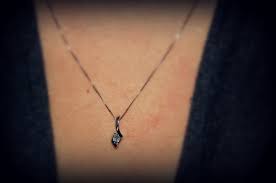 Helzberg Diamond

Helzberg Diamond
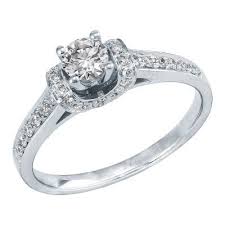 Helzberg Diamond
 Helzberg Diamond

Helzberg Diamond
 Helzberg Diamond

Helzberg Diamond
 Helzberg Diamond
 Helzberg Diamond
 Helzberg Diamond
 Helzberg Diamond

Helzberg Diamond
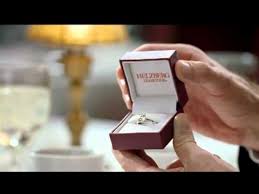 Helzberg Diamond

Helzberg Diamond

No comments:
Post a Comment